
Chemical peels
A professionally applied solution exfoliates skin at a chosen depth. Different peels have different purposes and recovery needs.
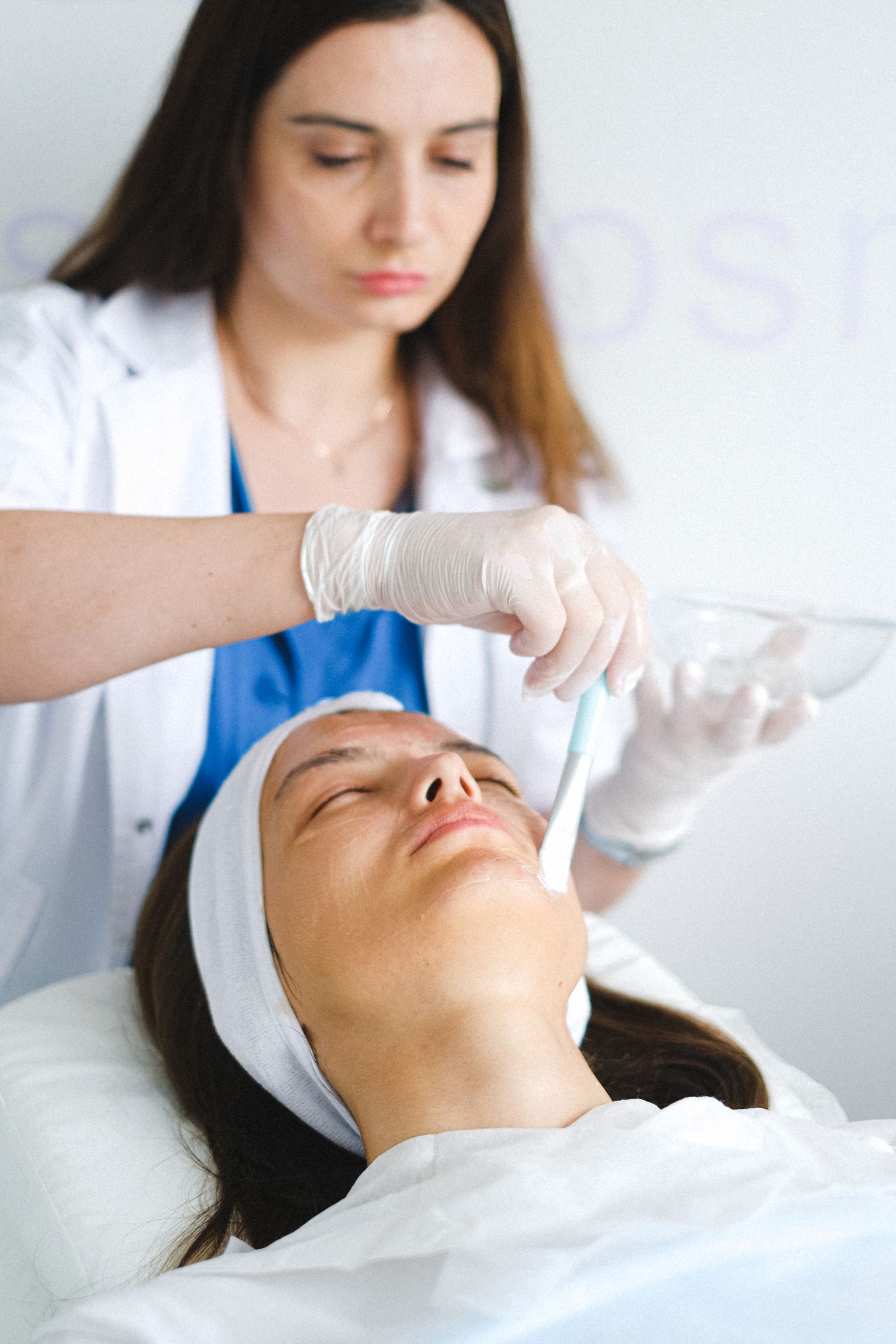
A facial product being applied with a brush. The photograph does not identify the formulation, acid strength or treatment depth.
- Often discussed for
- Uneven tone, rough texture, fine lines, some acne
- Recovery guide
- Light: around 1–7 days; deeper: 1–3 weeks or longer
Commonly known as
Names you may see for this category or its subtypes. Some describe a technique or a marketing concept rather than the same treatment.
- Chemical exfoliation / acid peel
- Alternative names for a chemical peel.
- AHA, BHA and TCA peels
- Names refer to ingredients or acid families. Glycolic acid is an AHA; salicylic acid is a BHA. The name alone does not establish treatment depth.
- Superficial, medium and deep peels
- Depth categories with different recovery needs. “Resurfacing” is broader and can also refer to laser treatments.
- Dermomineral revitalization peel / treatment
- A professional skin-quality approach using a mineralized chemical peel for controlled renewal within preparation, recovery, daily protection and maintenance. The term describes the treatment pathway, not a standard peel-depth class. Ask about the exact formula, intended depth and supporting evidence.
- TCA / trichloroacetic acid
- A chemical peeling agent. The finished formula and application determine depth and recovery.
- MCA / monochloroacetic acid
- Used in some professional peel formulas. It is distinct from TCA and mandelic acid, with its own chemical hazards and evidence.
- Other peel ingredients and blends
- Glycolic, lactic, mandelic and salicylic acids belong to different ingredient families. Jessner describes a mixed-acid formulation family rather than one acid. DGA can be a tone-related adjunct in some peel formulas.
What it can do
A suitable peel can improve superficial discoloration and texture. Results may build over a course; it does not replace treatment for an underlying skin condition.
What changes the experience
The formula, depth and your skin response matter. A light peel and a deep peel are very different procedures. Deep peels require a surgical setting.
Risks & aftercare
Redness and flaking may occur. Pigment changes, infection and scarring are possible. Follow the clinician’s recovery and sun-protection plan; do not pick peeling skin. Experience with your skin tone matters.
“What depth are you recommending and what recovery should I expect from this exact peel?”
Patient experiences83%“Worth It”Read patient summaries and sources
Selected accounts describe smoother-looking skin and improved confidence alongside peeling, discomfort and dissatisfaction with recovery.
RealSelf groups different products, techniques and providers under this heading. The score cannot distinguish individual approaches. Self-selected reviews reflect perceived value. They do not measure clinical success or your chance of a complication.
How to read these reviewsRead the original sources
Professional & regulatory sources
AAD: chemical peel overview AAD: chemical peel recovery and risks ASPS: chemical peel terminologyGeneral education. Your clinician can assess your individual suitability. Rules depend on the treatment country; FDA references concern the United States. External sources may be in another language.